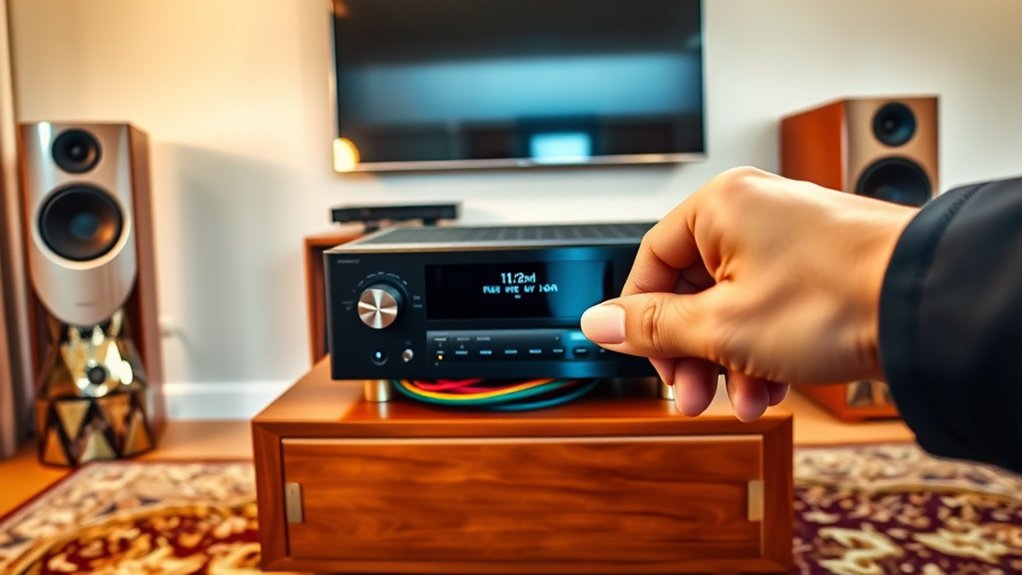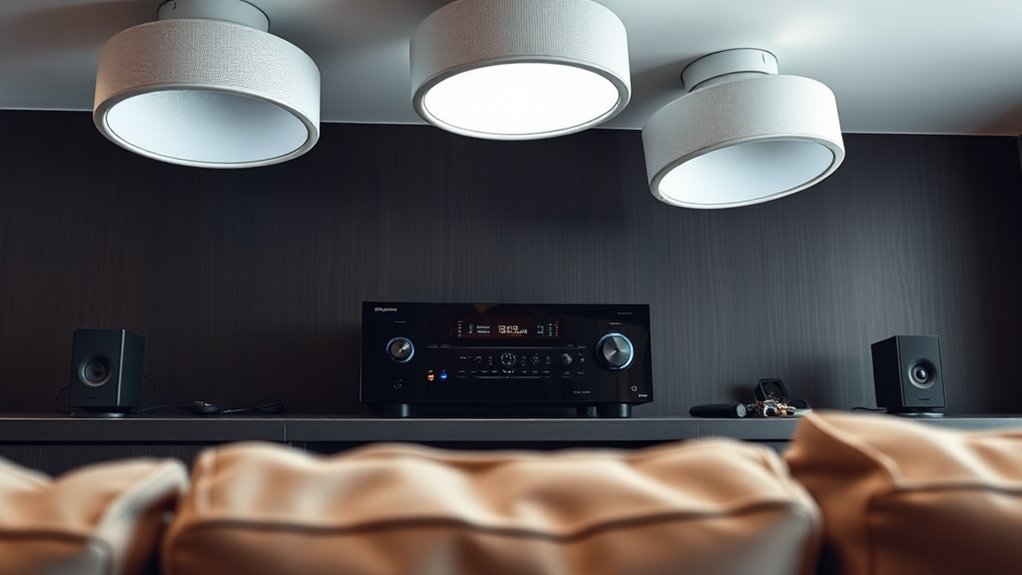

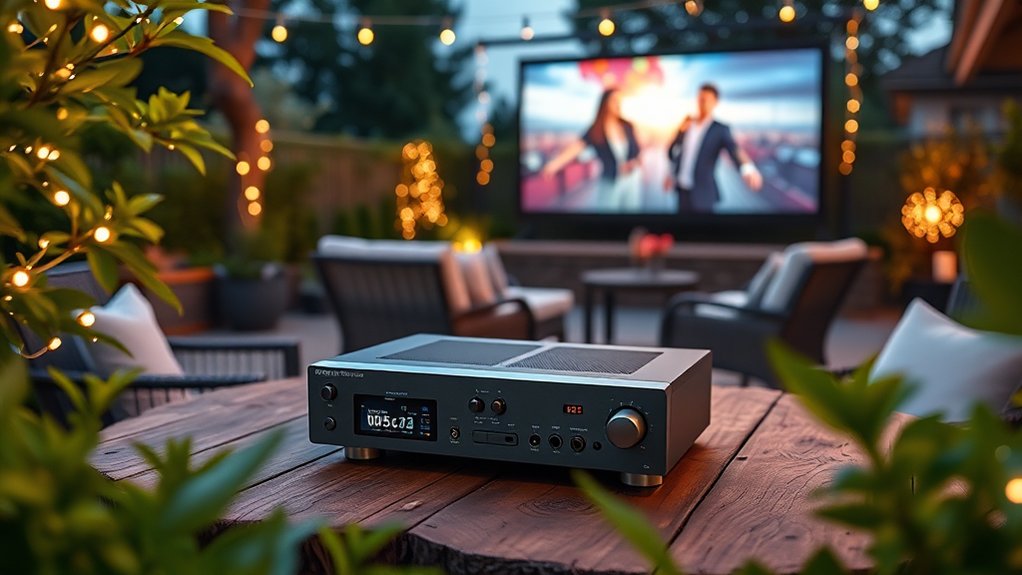
When choosing an AV amplifier for your outdoor home theater, you’ll want to balance power and sound quality. Aim for an amp that delivers 1.5 to 4 times the continuous power of your speakers—think of it as giving them a little extra oomph. Don’t forget about weather resistance; look for models with high IP ratings and sturdy materials. And although Bluetooth is convenient, wired connections often provide stronger signals. Up for more details on enhancing your outdoor experience?
Key Highlights
- Choose an amplifier that provides 1.5 to 2 times the continuous power rating of your outdoor speakers for optimal audio quality.
- Look for weather-resistant features like a high IP rating and durable materials to withstand outdoor conditions.
- Select a multi-channel amplifier to enhance your surround sound experience and ensure full audio coverage across the space.
- Prioritize low distortion levels and high signal-to-noise ratio for clear and enjoyable sound playback outdoors.
- Consider space and installation practicality, opting for compact models that can blend well with your outdoor aesthetics.
Understanding Power Requirements for Outdoor Speakers
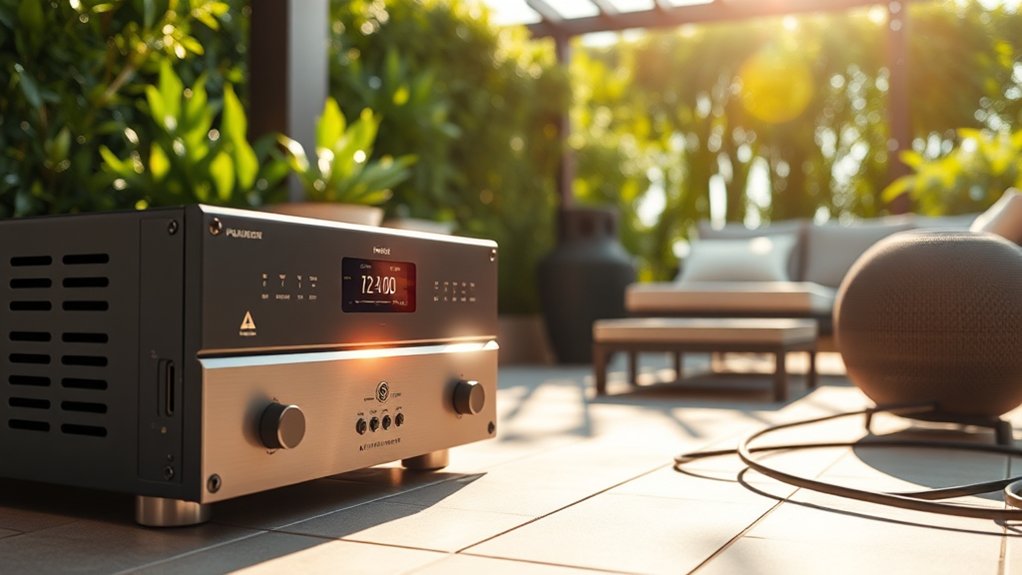
When you’re setting up an outdoor home theater, understanding the power requirements for your speakers can feel a bit overwhelming, but it’s really just about knowing a few key details.
First, keep in mind that speakers typically have a continuous power rating, usually a lot less than their peak power. For ideal sound quality, choose an amplifier that offers 1.5 to 2 times that continuous rating. Think of it as trying to keep a balloon inflated; too little air, and it pops! Additionally, using multiple speakers to handle total power can enhance your outdoor experience and ensure clear sound distribution. Ensuring adequate power is crucial for maintaining sound quality and coverage in outdoor environments.
In outdoor spaces, aim for 60 watts per speaker for smaller areas, and ramp it up for larger ones. You want that clear sound to reach your audience!
Ensuring Weather Resistance and Proper Placement
To guarantee your outdoor home theater sounds great and lasts through the seasons, it’s essential to prioritize weather resistance and proper placement.
Begin by choosing equipment with high IP ratings, like IP65 or IP66, to safeguard against dampness and dust. Opt for enclosures made of durable materials, such as UV-protected ABS, which won’t deteriorate under the sun. Additionally, selecting weather-resistant speakers will further enhance your setup’s durability in outdoor environments.
Secure your amplifiers and speakers with corrosion-resistant mounting brackets, and consider placing them under awnings to shield them from direct rain—because no one wants a surprise shower for their audio gear! To create an immersive experience, make sure to integrate surround sound systems that enhance the depth of your audio setup.
Elevating your equipment above potential flood zones ensures it weathers heavy rain, and sufficient spacing around amplifiers promotes proper heat dissipation.
Your outdoor setup will thank you!
Evaluating Connectivity and Signal Management Options
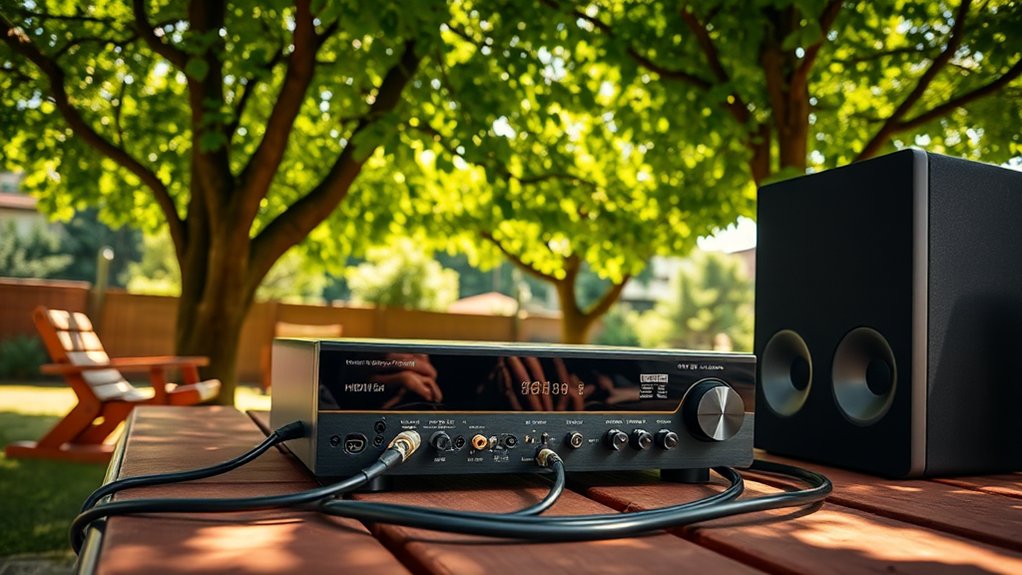
How can you create a seamless outdoor audio experience? Start by evaluating your connectivity options.
Bluetooth might be handy for quick pairing with smartphones or tablets, but don’t let its limited range—about 8-10 meters—cut off your enjoyment. For longer cable runs, consider wired connections like RCA or Toslink, which maintain a strong signal without interference. AVRs exhibit numerous input ports, making it easier to connect various audio sources to your outdoor setup.
You’ll want your amplifier protected from the elements, during still guaranteeing remote control access from inside. Think about placing outdoor Bluetooth amps in waterproof enclosures near your seating.
Plus, managing speaker connections effectively is vital; using thicker wire ensures you won’t compromise audio quality over long distances. After all, nothing ruins a show like an unexpected audio dropout, right?
Identifying Key Features for Quality Sound
Quality sound in your outdoor home theater isn’t just about slapping together a few speakers and an amplifier; it’s about selecting the right key features that guarantee your audio experience is second to none.
Start by choosing an amplifier that delivers 1.5 to 2 times the continuous power rating of your speakers, which protects against underpowering or damage. Aim for low distortion levels (THD ≤ 0.03%) to keep your audio playback clear, and a high signal-to-noise ratio (SNR ≥ 88dB) for noise-free enjoyment.
Don’t forget the importance of multi-channel outputs for that immersive surround sound experience.
Moreover, select a frequency response that covers a wide range, ensuring you get full-bodied bass and crisp highs—even under open skies.
Considering Size, Power Efficiency, and Installation Practicality
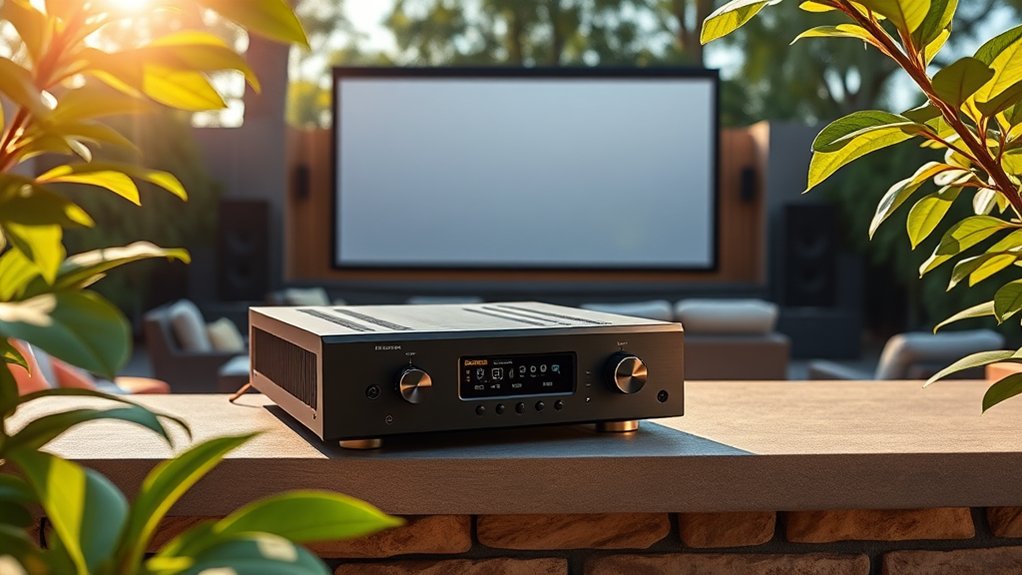
When you’re setting up an outdoor home theater, you can’t overlook the size and power efficiency of your AV amplifier, especially since these factors directly impact your audio experience.
First off, consider the space you have—compact Class D amplifiers are great for discreet setups, whereas larger multi-channel models may need dedicated cabinets for ventilation.
Evaluate your available space—compact Class D amplifiers offer discretion, while larger multi-channel models require dedicated ventilation cabinets.
Power efficiency is important, too; aim for an amplifier delivering 1.5 to 4 times your speaker’s continuous power rating to avoid distortion.
And don’t forget installation practicality! Look for weather-resistant models, and contemplate cable management—no one wants unsightly wires!
Integrating With Outdoor Home Theater Systems
Integrating an AV amplifier with your outdoor home theater system can feel overwhelming, especially with the array of components that need to work in harmony.
First, verify your amplifier is compatible with weather-resistant outdoor speakers; after all, you wouldn’t want your gear soaking in a sudden rain. It’s important to match the amplifier’s power output with your speakers’ requirements to avoid unwanted distortion or underperformance.
If you plan multiple speaker zones, select an amplifier with multi-channel support, which lets you enjoy great sound throughout your space.
Don’t forget connectivity—options like Bluetooth or HDMI make switching sources a breeze.
With careful planning, you’ll create an outdoor setup that might just rival your living room—without the walls!
Planning for Future Upgradability and Expansion
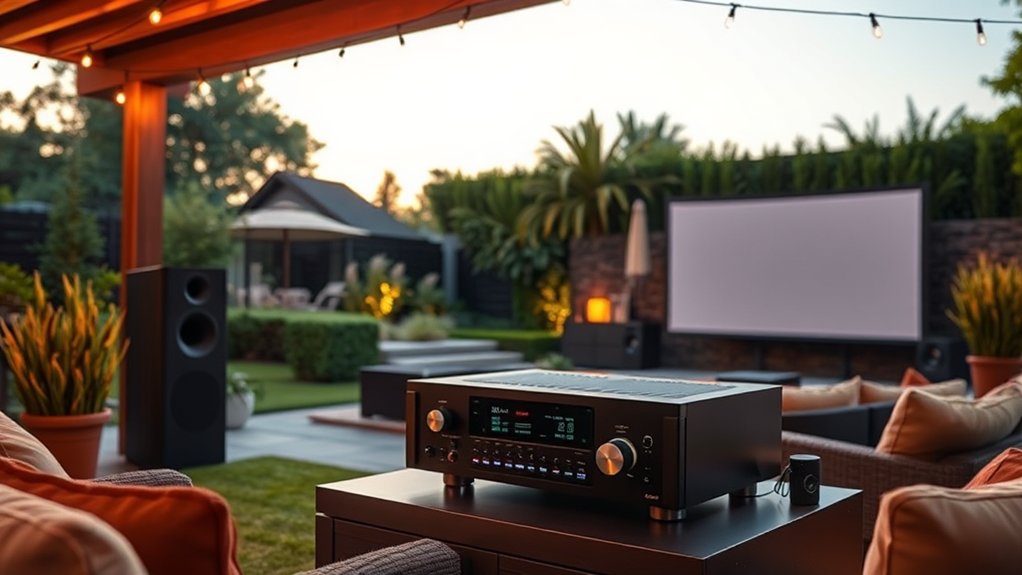
As you plunge into selecting an AV amplifier for your outdoor home theater, it’s crucial to think ahead—after all, you want to create a system that grows with you.
Choose multi-channel amplifiers that can power multiple speaker pairs, letting you expand your setup without hassle. Focus your budget on high-quality speakers initially, leaving room to upgrade your amplifier later.
Opt for models with scalable power and various input options, ensuring future devices integrate smoothly. Furthermore, consider outdoor-rated amplifiers that boast durability; nobody likes a dead system after a storm.
That said, keep an eye on compatibility with smart home tech—who wouldn’t love controlling their music with a quick voice command? Additionally, seek out amplifiers that support Dolby Atmos technology to enhance your auditory experience. Future-proof your choice, and you’ll enjoy endless outdoor entertainment.
Frequently Asked Questions
What Type of Cables Should I Use for Outdoor Installations?
For outdoor installations, you’ll want to use outdoor-rated Ethernet cables like Cat6, weather-resistant speaker wire, and coaxial cables designed for minimal signal loss. In addition, make certain all cables are waterproof and suitable for direct burial.
Can I Remotely Control the Amplifier From My Smartphone?
Yes, you can remotely control your amplifier from your smartphone. Look for models with WiFi or Bluetooth connectivity, allowing you to adjust volume, switch inputs, and manage settings easily, all from your device.
Is It Necessary to Use an Equalizer With My Amplifier?
It isn’t always necessary to use an equalizer with your amplifier. If your setup has good calibration or quality speakers, you might not need it. Nevertheless, it can improve sound clarity and customization in challenging environments.
How Can I Protect the Amplifier During Severe Weather?
To protect your amplifier during severe weather, disconnect it, store it indoors or cover it with a waterproof tarp. Make certain it’s housed in a weather-resistant enclosure and raised from potential flooding areas for added security.
What Guarantees Do Amplifiers Typically Come With for Outdoor Use?
Most outdoor amplifiers come with warranties ranging from 1 to 5 years. Verify you check for specific coverage against weather damage, as many warranties exclude issues from improper installation or environmental abuse beyond design specifications.