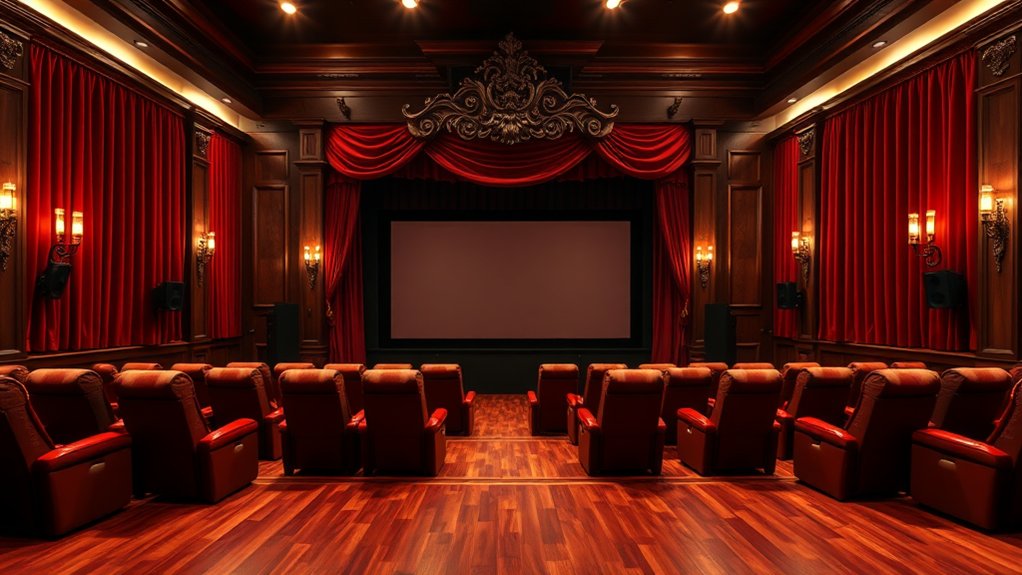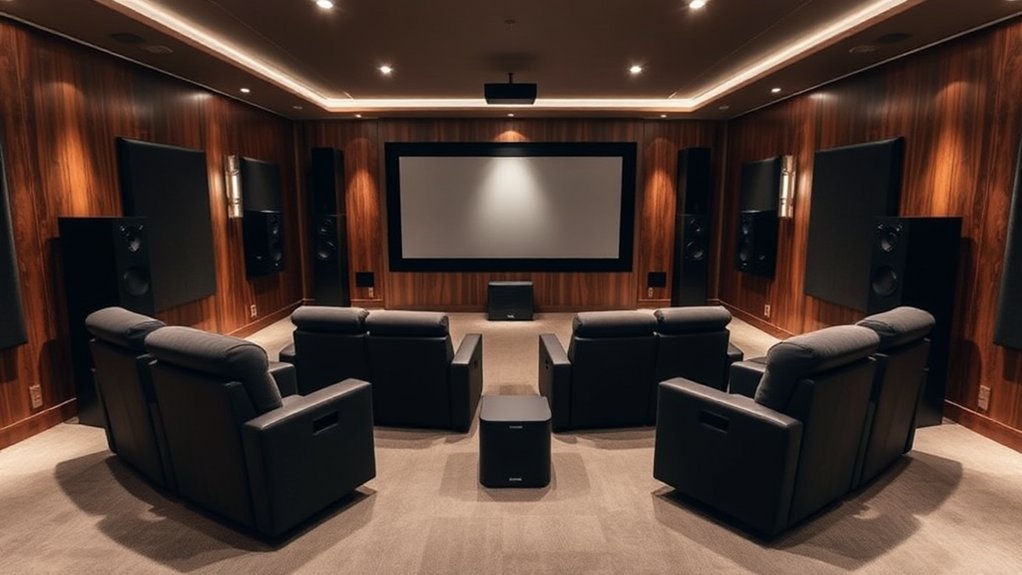

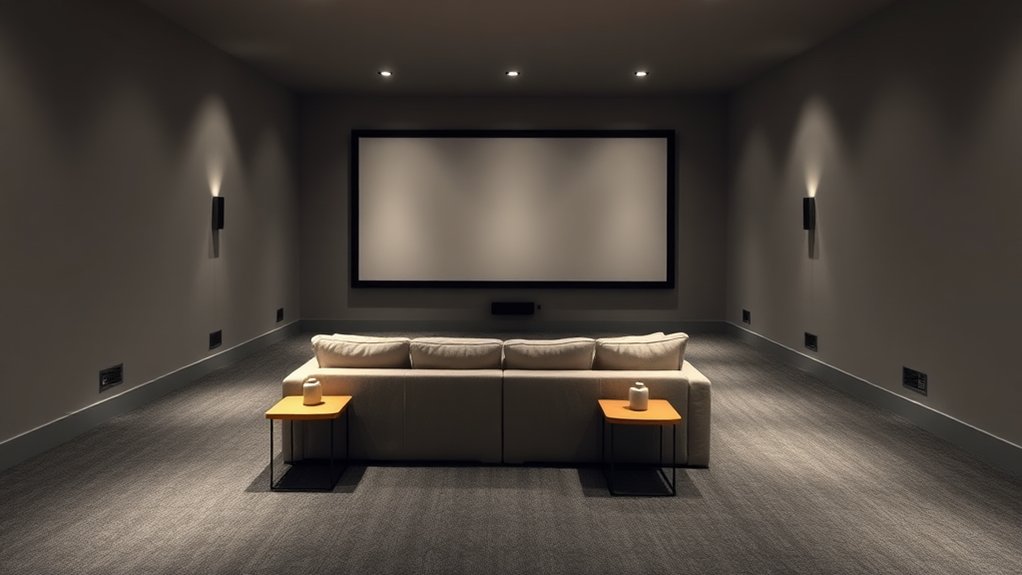
Choosing a minimalist theater room design offers a fantastic blend of style and efficiency. By using sleek lines and functional elements, you get a space that not only focuses on the performance but also improves your viewing experience. Plus, with less clutter, maintenance becomes a breeze—who wouldn’t love that? Lightweight materials and modular seating mean you can easily adapt to any scenario, making every film night feel special. Stick around, and you’ll uncover even more benefits of this savvy approach!
Key Highlights
- Minimalism lowers construction and material costs, making theater room setups more affordable and efficient.
- Lightweight, multi-functional set pieces enhance flexibility, reducing downtime during scene transitions.
- An uncluttered design directs audience attention to key narrative elements, improving overall engagement.
- Simplified aesthetics result in easier maintenance and upkeep, saving time and resources in the long run.
- Comfortable layouts and adjustable lighting foster a relaxing viewing experience, enriching audience immersion in performances.
Cost Efficiency and Resource Optimization in Theater Design
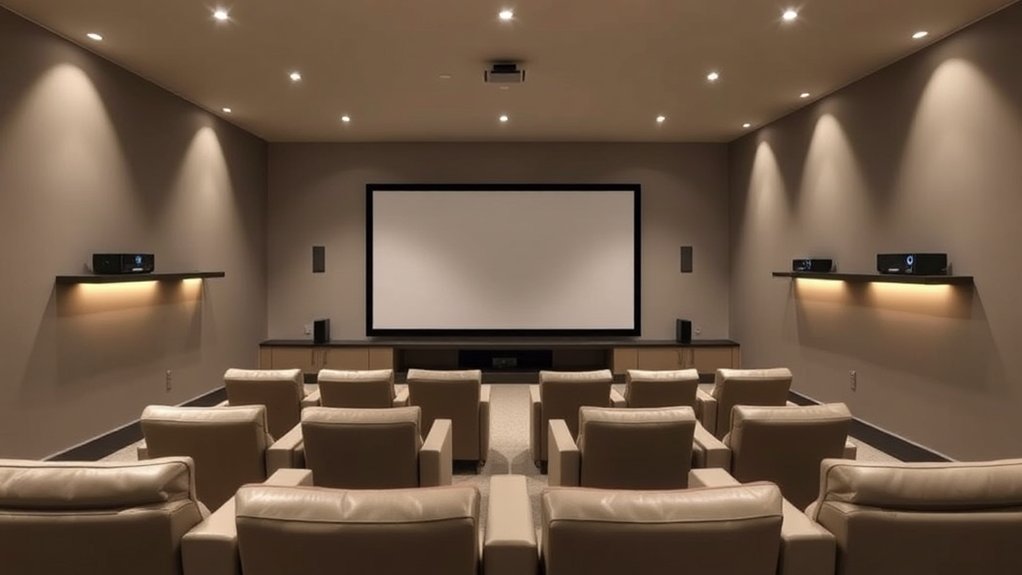
When you think about theater design, do you imagine sprawling sets loaded with intricate details?
Actually, minimalism flips that script entirely. By using fewer physical elements, you can considerably cut material and construction costs. Lightweight materials like fabric screens aren’t only easy to transport but additionally budget-friendly.
Think LED lighting and digital projections replacing heavy machinery—it’s like swapping a bulky old car for a sleek electric bike! Additionally, the use of functional and multi-purpose props allows for greater versatility in productions, ultimately enhancing efficiency on stage. Furthermore, a tidy environment ensures that the focus remains on storytelling rather than distractions, contributing to a more seamless performance.
Moreover, simpler designs require less maintenance, so you save cash long-term. Imagine fewer props serving multiple roles, reducing clutter and optimizing space—you’ve fundamentally turned your theater into a multifunctional venue.
In a nutshell, minimalist theater design promotes financial savvy without sacrificing storytelling. Who knew saving money could be so elegant?
Functional and Versatile Set Elements for Performance Flexibility
In today’s theater world, embracing functional and versatile set elements can transform how we approach performances.
Imagine modular set pieces that swiftly adapt between scenes, cutting downtime and keeping audiences engaged. Lightweight materials make it simple for your crew to reposition elements, whereas multi-functional furniture—like benches that double as platforms—maximizes limited space. Additionally, it is crucial to ensure that actor movement is unobstructed and functional, allowing for a seamless flow throughout the performance. Minimalist design prioritizes simplicity and functionality, ensuring that every element serves a purpose without adding clutter.
Using neutral colors on sets means you don’t have to repaint for every scene; lighting can work its magic instead. Furthermore, dynamic projections can create entire worlds without needing a huge build-out.
With simplified designs and multifunctional props, you’re not just saving on storage, but you’re enhancing storytelling flexibility. It begs the question: who wouldn’t want that kind of creative freedom?
Aesthetic Clarity and Visual Focus for Enhanced Engagement
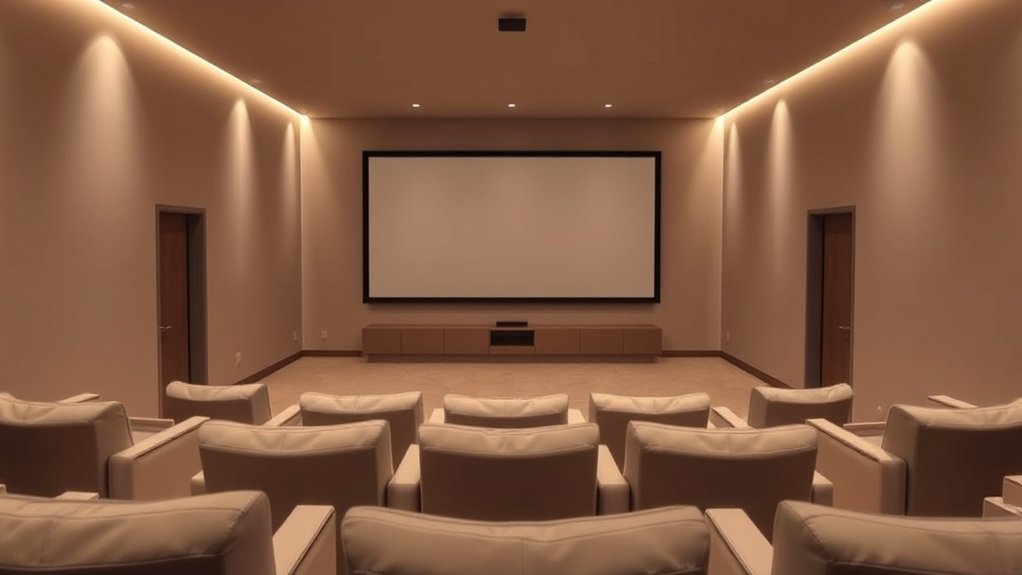
Minimalism in theater isn’t just about cutting back; it’s about enhancing what truly matters on stage. By stripping away excessive props and decorations, you’ll find your focus directed toward crucial narrative elements, making it easier to engage with the story. An uncluttered stage, with clean lines and restrained colors, guides your eyes to pivotal moments, allowing for a clearer understanding of the performance. This visual hierarchy isn’t just aesthetically pleasing; it promotes mental clarity, reducing cognitive overload that often distracts us during complex plays. With less visual noise, you can connect more deeply with the actors and themes, inviting a richer emotional experience. After all, isn’t it easier to enjoy the show when simplicity does the heavy lifting? Moreover, through the influence of modern technology, minimalist stage designs create dynamic environments that further enhance the theatrical experience.
Enhanced Comfort and Relaxation in Viewing Experience
Even though you might think that enjoying a film or play is all about the story, enhancing comfort and relaxation during your viewing experience can make a world of difference.
In a minimalist theater room, you’ll find that sound quality improves greatly; fewer surfaces mean clearer dialogue and minimized echo, making every line easier to catch. You’ll similarly enjoy adjustable ambient lighting that reduces eye strain—who wants to squint at the screen?
Plus, with free-flowing layouts and ergonomically designed seating, every corner of your space supports physical comfort and pleasant posture.
That uncluttered vibe doesn’t just look good; it encourages mental calmness, allowing you to focus on the action rather than distractions. After all, who wouldn’t want to feel utterly relaxed as they’re immersed in a good story?
Maintenance and Practicality for Long-lasting Appeal
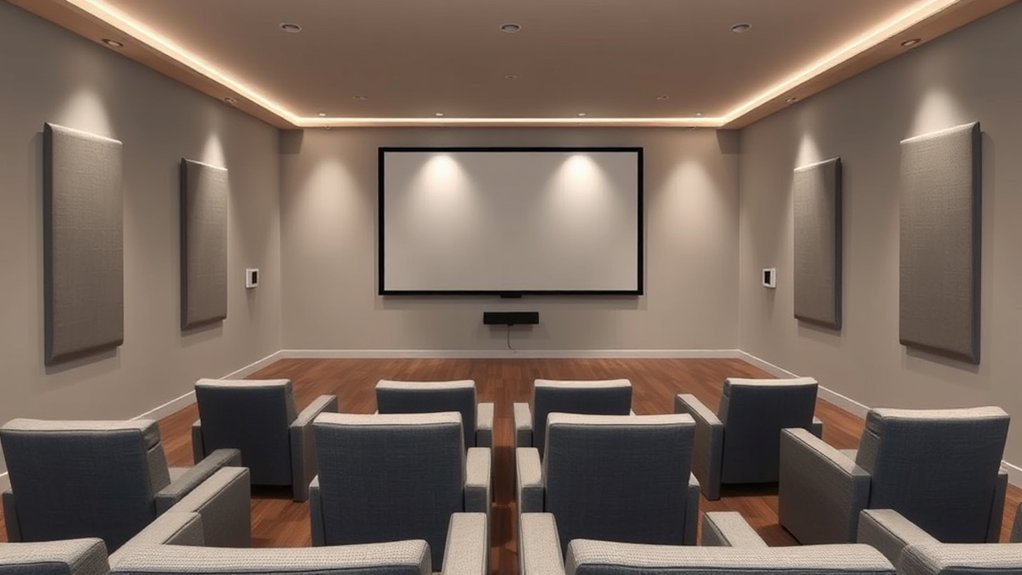
Picture a theater room that not only dazzles with its sleek design but similarly simplifies your life regarding maintenance. With fewer decorative elements, dusting becomes a rare chore rather than a daily dread.
You’ll find that sleek surfaces and simple materials don’t just reduce grime; they too keep your space looking sharp. Furniture with smooth, non-fabric finishes is a breeze to wipe down—goodbye, upholstery stains!
Plus, clutter-free layouts, aided by integrated storage solutions, mean less mess to tackle. Ever struggled with tangled wires? Not here!
And when you choose durable, timeless materials, you’ll find your theater remains stylish without constant updates. With energy-efficient lighting and sustainable choices, maintaining this inviting space is as practical as it’s appealing.
What’s not to love?
Frequently Asked Questions
How Can I Incorporate Minimalism in a Small Theater Space?
To incorporate minimalism in your small theater space, use multi-functional furniture, opt for wall-mounted storage, choose a projector, select neutral colors, and keep decor simple. This creates an open, organized, and inviting atmosphere for entertainment.
What Materials Are Best for Minimalist Theater Designs?
For minimalist theater designs, use thick acoustic fabrics like microsuede and sustainable materials like wood and glass. Opt for simple furniture, hidden storage, and soft lighting to improve ambiance during maintaining a clean, uncluttered space.
Are There Specific Lighting Techniques for Minimal Setups?
Yes, for minimal setups, use spotlights to draw attention, conceal light sources to maintain focus, and employ contrasting brightness for mood. Opt for multifunctional lights that adapt to scene changes and provide subtle, immersive illumination.
How Does Minimalist Design Impact Audience Behavior During Performances?
Minimalist design improves audience behavior by reducing distractions, promoting focus and mindfulness. You’ll find it nurtures empathy and reflection, encouraging deeper engagement with the performance as well as allowing for personal interpretation and a more immersive experience.
Can Minimalist Designs Adapt to Various Theatrical Styles and Genres?
Yes, minimalist designs can adapt to various theatrical styles and genres. By using multifunctional props and abstract backgrounds, you encourage flexibility in storytelling, allowing audiences to immerse themselves in a range of interpretive narratives.