
To soundproof your home theater effectively, start by optimizing wall construction techniques like adding dense soundproof insulation and sealing any gaps. Then, improve ceiling soundproofing with vibration isolation systems and thick drywall layers. Next, invest in solid core doors and double-paned windows with acoustic caulking to block noise. Consider thick carpets and floating floors for quieter sound absorption underfoot. Finally, utilize advanced insulation strategies, like mass-loaded vinyl, to create a peaceful viewing experience. Curious about more details?
Key Highlights
- Implement floating wall systems with dense soundproof insulation for effective sound transmission reduction.
- Use vibration isolation for ceilings and install acoustic treatments to minimize sound reflections.
- Choose solid wood or metal-core doors with acoustic seals to effectively block noise.
- Opt for double-paned windows with laminated glass and heavy sound-blocking curtains for enhanced isolation.
- Employ soundproof underlayment and thick carpets to dampen noise from flooring.
Optimize Wall Construction Techniques
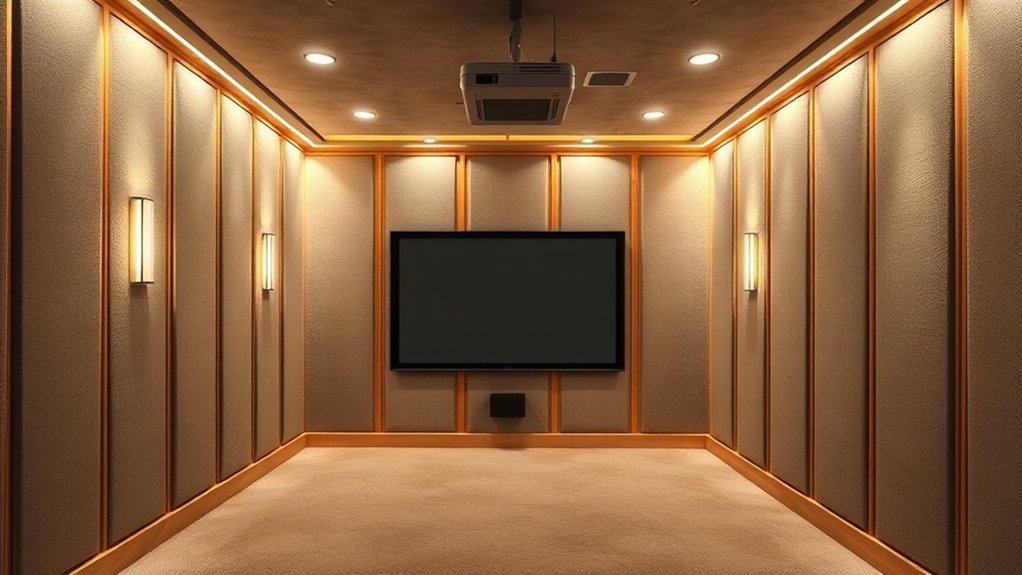
When starting on the voyage to optimize wall construction for your home theater, understanding the delicate interplay between sound and space becomes vital.
First, consider implementing floating wall systems; they separate drywall from structural studs and create an air gap that notably reduces sound transmission, particularly those deep, bass-heavy rumbles of sound (like that epic subwoofer action). Moreover, including absorption, mass, and damping elements in your setup can enhance soundproofing effectiveness. An important aspect to remember is that soundbar features, such as Dolby Atmos technology, contribute to a more immersive listening experience in your theater space.
Likewise, filling wall cavities with dense soundproof insulation can work wonders, absorbing sound waves and stopping noise from sneaking into adjoining rooms. Quality insulation benefits all rooms, but has a significant impact on theater spaces, making it essential to invest in high-performance materials.
Don’t forget to seal all cracks and gaps as you’re at it—after all, even the tiniest holes can let sound bust through.
Enhance Ceiling Soundproofing Methods
To truly improve your home theater experience, enhancing ceiling soundproofing methods is crucial, especially if you want to keep your cinematic adventures from disturbing the peace of your unsuspecting neighbors upstairs.
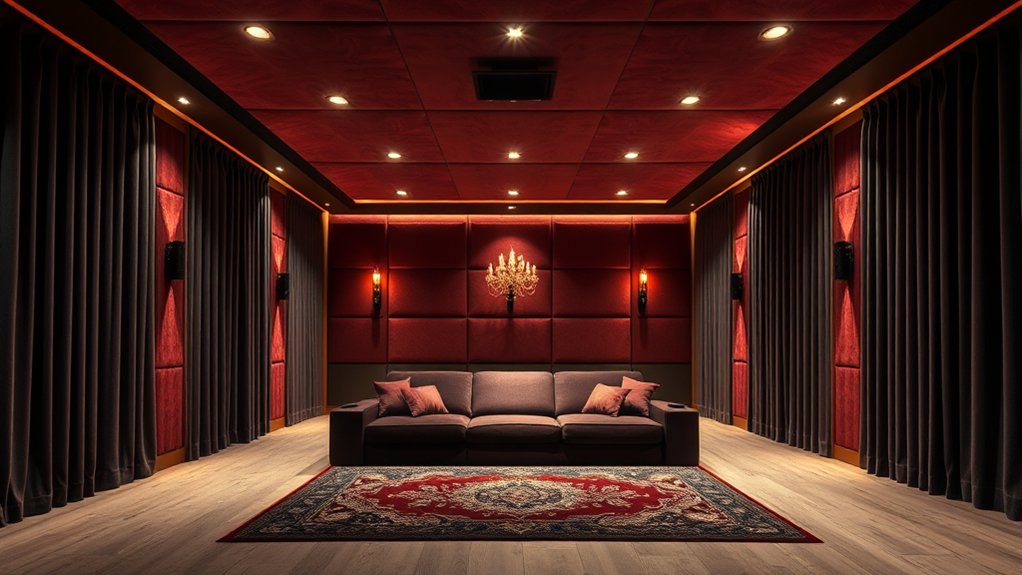
Start by considering vibration isolation systems, which suspend ceilings over foam cushions, preventing those annoying sound vibrations from traveling. Adding Quiet Batt® Soundproofing Insulation further enhances your soundproofing efforts by reducing sound vibrations effectively. Additionally, the use of acoustic treatments can greatly improve the overall sound quality and reduce reflections that may disrupt your movie experience.
Consider using vibration isolation systems to suspend ceilings over foam cushions, effectively minimizing sound vibrations from disturbing your neighbors.
If you’re feeling ambitious, a room-in-room structure creates a fully decoupled ceiling, and hey, air gaps of at least an inch help block unwanted noise.
Using two layers of 5/8-inch drywall with acoustic sealant applied to seams can greatly reduce sound transmission.
Don’t forget acoustic panels or foam to absorb those mid-range frequencies.
Install Effective Door and Window Solutions
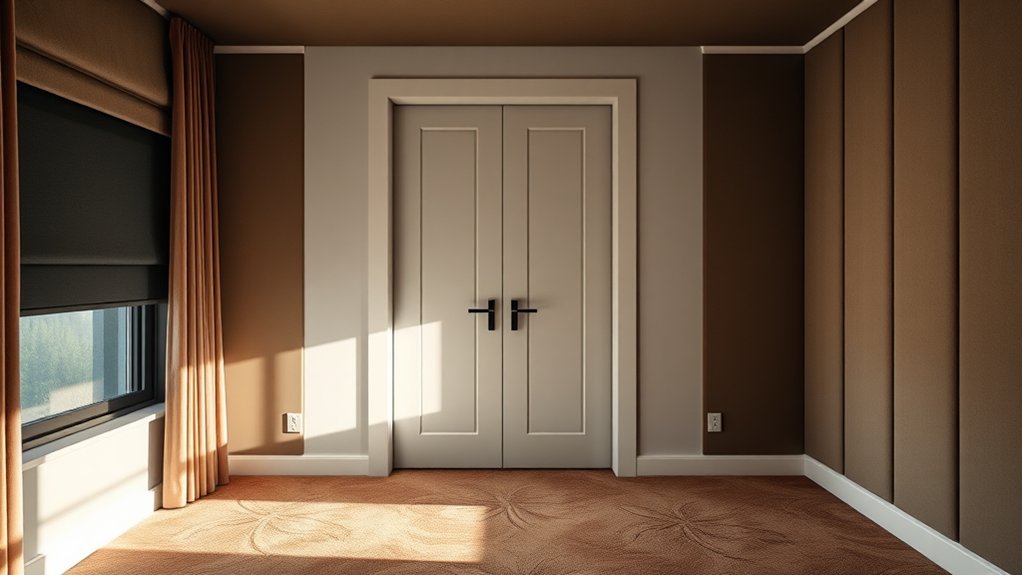
Effective door and window solutions can make all the difference in achieving a sound-dampened home theater experience.
You should consider selecting dense, heavy materials like solid wood or metal-core doors for maximum sound isolation. Acoustic core doors are particularly designed to resist sound, so those are a great option too. In addition to doors, soundproof doors can play a critical role in ensuring that the viewing experience remains uninterrupted.
Don’t forget about installing acoustic door seals, which can seal gaps and prevent noise from sneaking in.
For windows, opt for double-paned or triple-paned options with laminated glass, ensuring tighter seals with specialized acoustic caulking.
Adding heavy, sound-blocking curtains can further boost sound isolation.
And honestly, who wouldn’t want to enjoy their favorite movie without an uninvited soundtrack?
Utilize Comprehensive Flooring Soundproofing
Even though effective door and window solutions set the stage for a tranquil home theater experience, the flooring in your space plays an equally significant role in soundproofing.
You’ll want to start with soundproof underlayment, especially if there’s living space below. Think about shredded rubber or cork; they absorb sound but can be humidity-sensitive, so pick your battles carefully.
Hard surfaces like wood or tile reflect sound—is that really the vibe you’re after? Instead, consider thick carpet or area rugs to dampen noise.
Floating floors, paired with decoupled underlayments, can be a game-changer for isolating unwanted vibrations.
Implement Advanced Insulation Strategies
When you think about soundproofing your home theater, insulation often gets overshadowed by other elements like soundproof doors and windows, but it plays a crucial role, believe it or not.
To maximize your soundproofing efforts, consider advanced insulation strategies. For starters, materials like fiberglass batts and mineral wool offer excellent sound dampening features. Layering double stud walls can drastically reduce sound leakage, whereas using mass-loaded vinyl creates an effective barrier.
Don’t forget to seal gaps with acoustic caulk—those annoying cracks love to let sound slip through! At the same time, installing resilient channels can minimize vibrations from drywall.
And let’s not forget about specialized materials like Green Glue for added damping. After all, isn’t a quiet theater worth all this effort?
Frequently Asked Questions
How Does Soundproofing Improve Overall Home Comfort and Enjoyment?
Soundproofing greatly improves your home comfort by minimizing disruptive noises and creating a serene environment. You’ll enjoy better sleep quality, increased privacy, and a chill atmosphere, all during elevating your overall experience in your living space.
Can Soundproofing Techniques Reduce Echo and Improve Sound Quality?
Yes, soundproofing techniques can greatly reduce echo and improve sound quality. By incorporating acoustic panels, sound-damping curtains, and proper insulation, you create a more enjoyable listening environment, enhancing your overall experience and comfort.
What Is the Cost Range for a Home Theater Soundproofing Project?
The cost for soundproofing your home theater typically ranges from $1,000 to $10,000, depending on room size and materials. On average, you can expect to spend around $1,861 for basic soundproofing solutions.
How Long Does It Take to Soundproof a Home Theater?
It usually takes one to two weeks to soundproof a home theater, depending on the project’s scope. You’ll need time for material installation, inspections, and any unforeseen delays that arise during the process.
Are DIY Soundproofing Methods as Effective as Professional Solutions?
DIY soundproofing methods can reduce noise, but they’re often inconsistent and less effective than professional solutions. You might save money, but for reliable results, investing in expert services is usually your best bet.